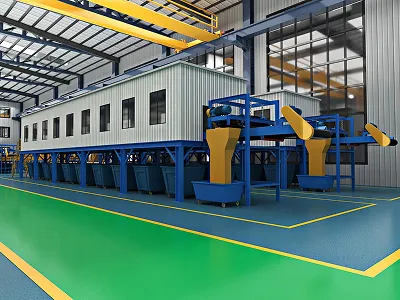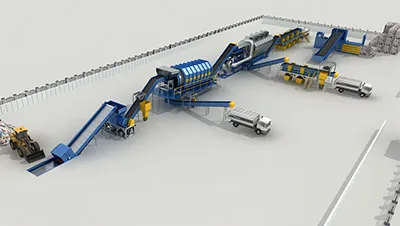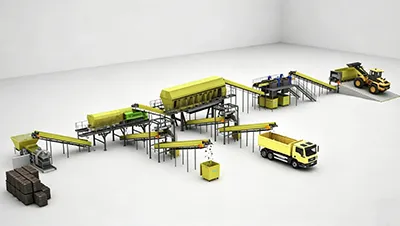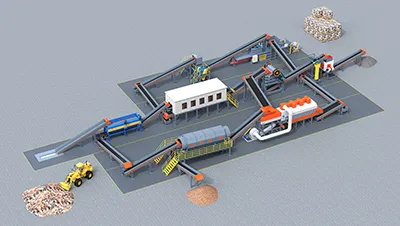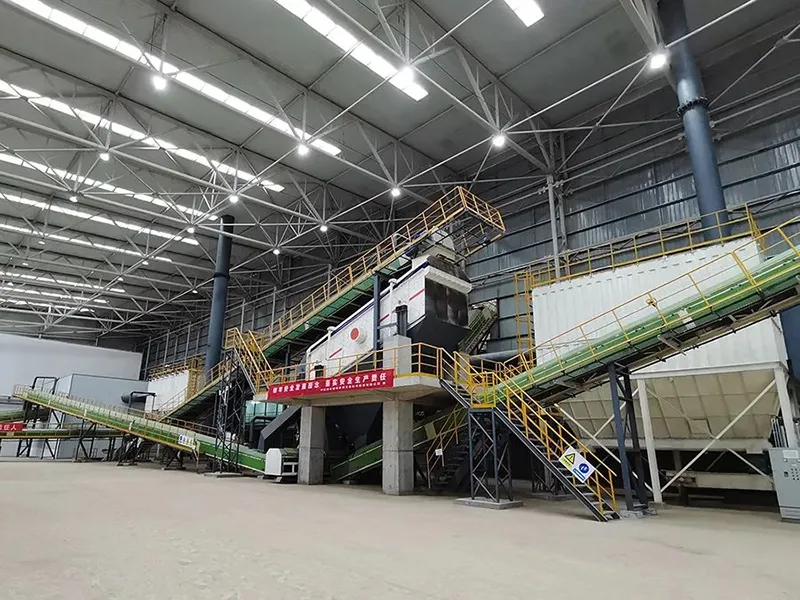
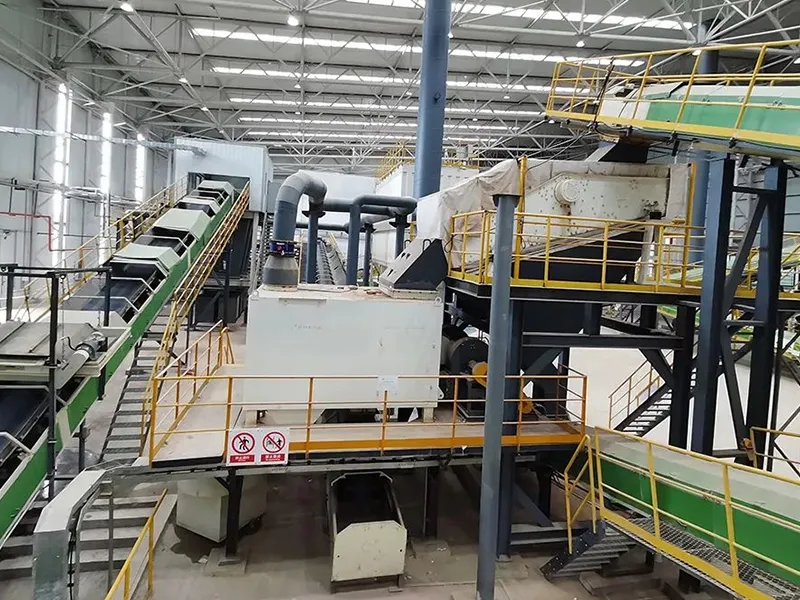
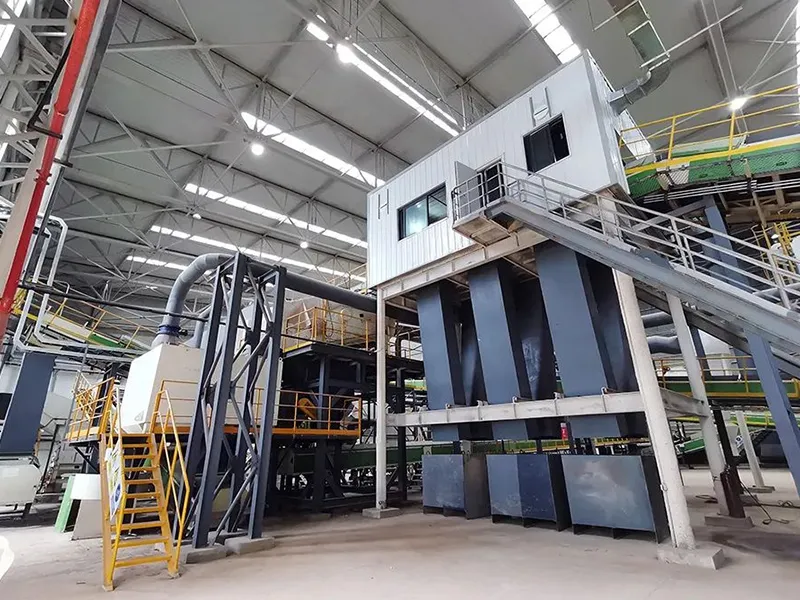
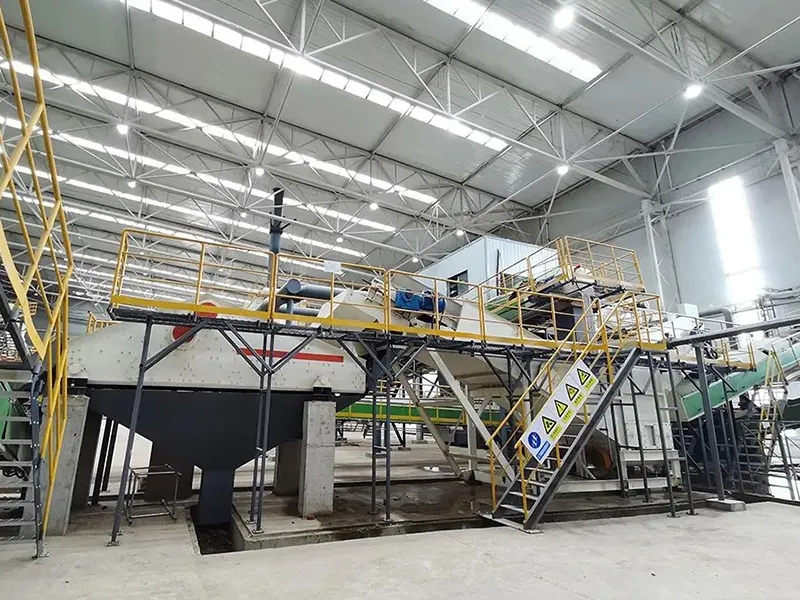
We provide tailored solutions for construction and demolition waste, covering both construction debris and renovation waste. For construction waste, the process integrates screening, crushing, impurity removal, and light material separation to recover metals and convert concrete and masonry into recycled aggregates. For renovation waste, the process follows a “sorting before crushing” approach, with detailed screening to reduce processing complexity and improve separation efficiency.
The system can be configured as a fixed large-scale production line or as a mobile unit for on-site operation, reducing material transport costs. Final outputs include recycled aggregates, metals, and combustible light fractions, which can be reused in applications such as road base, brick production, cement blending, and fuel processing.
- High Resource Recovery Rate
Over 90% of processed material can be converted into recycled aggregates, turning waste into reusable construction materials. - Strong Material Adaptability
Capable of handling mixed construction and renovation waste, including concrete, bricks, tiles, mortar, and interior demolition debris. - Enclosed, Environmentally Controlled Operation
Equipped with dust collection, noise reduction, and spray systems to help maintain a cleaner and more controlled working environment. - Compact Layout with Flexible Configuration
Designed for efficient space utilization, with options for fixed installations or mobile, modular setups to suit different project requirements.
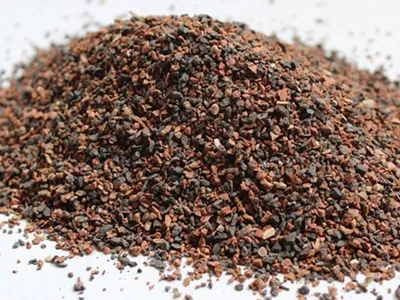
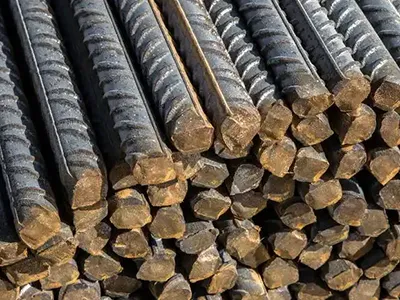

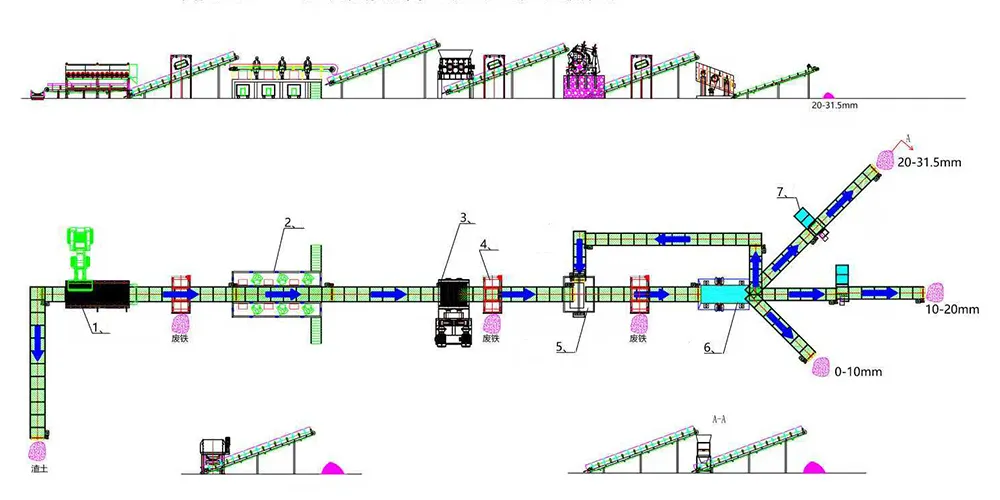
Process Flow Diagram
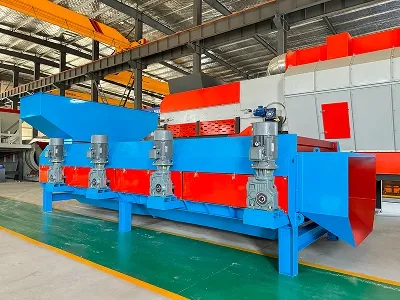
- 1. Roller Screen
- 2. Manual Sorting Conveyer
- 3. Double Toothed Roll Crusher
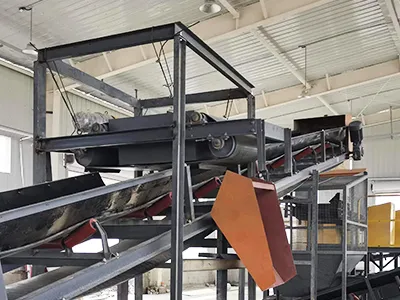
- 4. Overhead Magnetic Separator
- 5. Impact Crusher
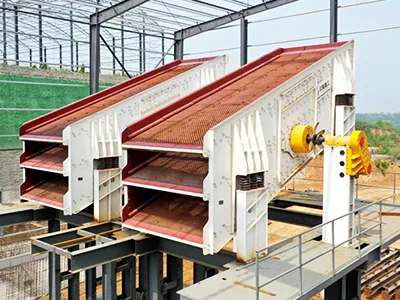
- 6. Vibrating Screen
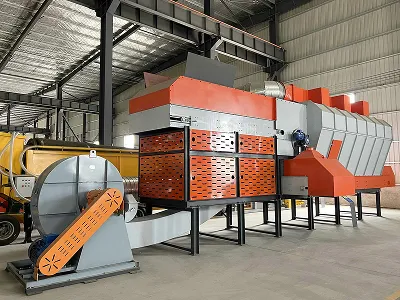
- 7. Air Separator (Purification)
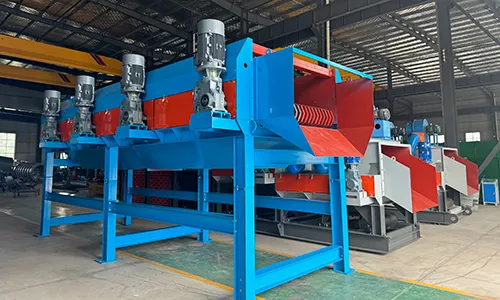
Feeding & Primary Screening
Construction waste is fed into the system by a loader and passes through a roller screen, where soil and fine particles are separated at an early stage. This reduces the load on downstream equipment and helps improve overall line efficiency.
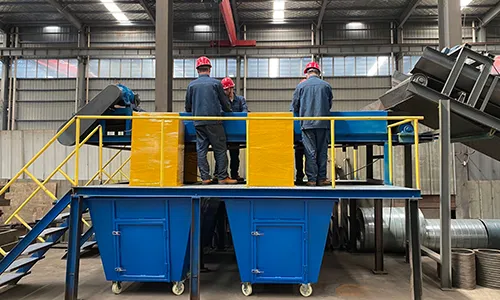
Bulky Waste Sorting
LarLarge non-construction items, such as clothing, bedding, and other bulky materials, are manually removed to prevent interference with subsequent processing.
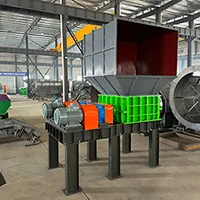
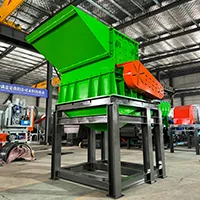
Crushing & Size Reduction
Heavy-duty crushers are used to break down concrete, bricks, and mortar into suitable particle sizes for further processing.
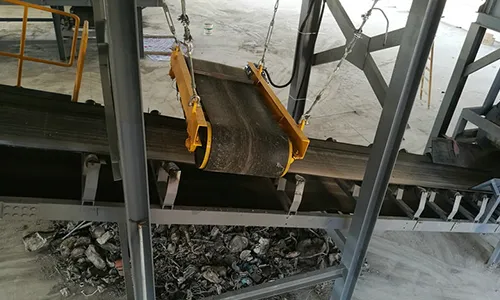
Metal Separation
Magnetic separation is applied to recover ferrous metals such as steel bars and iron wires from the material stream.
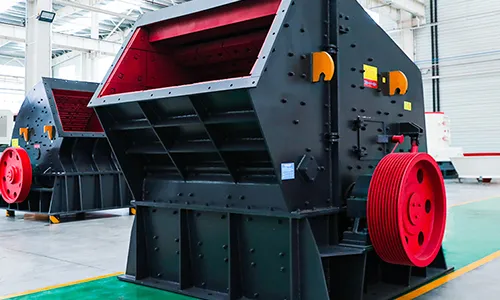
Impact Crushing & Shaping
An impact crusher further reduces and shapes the material, producing more uniform particles that meet recycled aggregate standards.
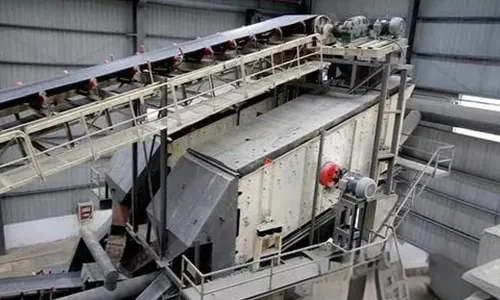
Multi-Stage Screening
The material is classified into different sizes, including fine sand, coarse aggregates, and fine aggregates, through multi-stage screening.
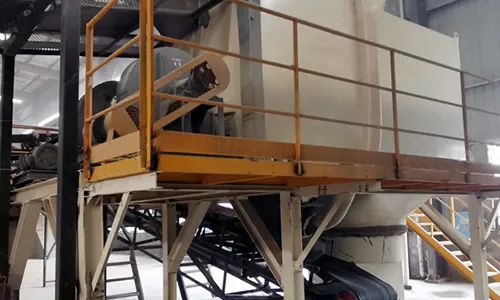
Light Material Separation
Air separation removes light impurities such as plastics, films, wood chips, and paper, improving the purity of the final recycled materials.
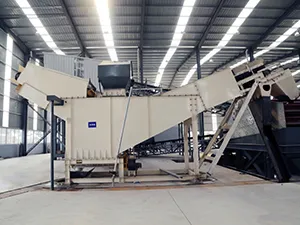
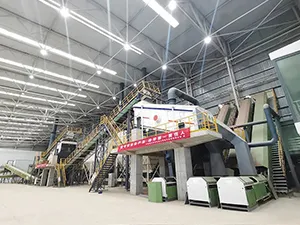
- Jiangsu, China
- Processing Capacity: 100 tons per hour
- Process: Feeding, Crushing, Magnetic Separation, Screening, Separation
- Guangdong, China
- Processing Capacity: 80 tons per hour
- Process: Screening, Sorting, Crushing, Separation, Screening, Light Material Separation